What Emily Paxhia Wants Every Dispensary Operator to Understand
“Retail is more than just shelves and SKU counts.”
— High Touch podcast
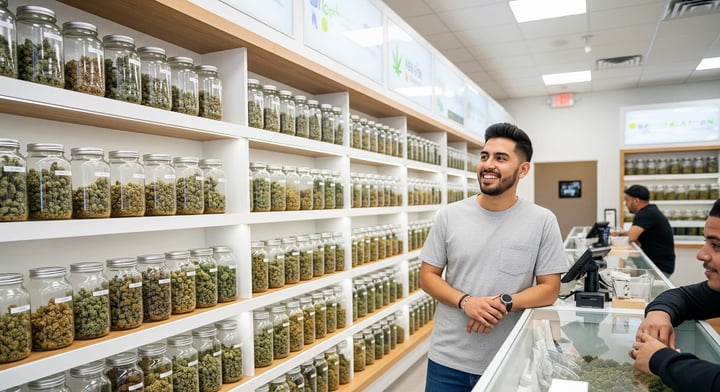
The dispensary floor is one of the most overlooked battlegrounds in cannabis. While brands spend millions refining product formulas and visuals, retail is still playing catch-up — stuck between regulatory handcuffs and copy-paste “Apple Store” tropes.
But if you ask longtime cannabis investor Emily Paxhia, that’s where the biggest opportunity lives.
On the latest episode of High Touch, Emily shares what retailers can learn from wine tasting rooms, the rise of Napa Valley, and her own portfolio of cannabis brands. Her message? Product alone isn’t enough. You need a point of view.
What a Great Retail Experience Actually Feels Like
“Some stores try to be medical. Some go for a farmer’s market feel. Others want to feel high-tech. That’s fine — as long as it’s intentional.”
According to Emily, customers don’t need every store to look the same. What they need is clarity. When a customer walks in, they should know what the store stands for — and feel emotionally aligned with it.
She cites examples like:
- The Travel Agency (NYC): A dispensary with vintage airline branding, complete with boarding pass promotions and a cheeky passport check at the door.
- Sunburn (FL): A vertically integrated retailer with a brand story rooted in legacy cannabis culture — complete with newspaper clippings on the walls and DEA case references on receipts.
These aren’t gimmicks. They’re expressions of identity — and they deepen the customer’s emotional connection.
Familiarity Wins: Why “Apple Store” Vibes Still Work (Sometimes)
Emily isn’t totally against sleek, tech-forward dispensaries. In fact, she recognizes that familiar formats reduce friction.
“There’s a psychological comfort in spaces that feel familiar. If your store feels like Whole Foods or Sephora or Wegmans — that can be a win, too.”
The key is to be deliberate, not derivative. What’s deadly is trying to be everything to everyone. The best cannabis retailers curate the experience, not just the menu.
Budtenders as the New Sommeliers
One of the most powerful analogies Emily draws is between cannabis dispensaries and wine tasting rooms.
Just as sommeliers or bottle shop clerks guide customers beyond cabernets and oaky chardonnays, budtenders are the conduit to discovering the nuances of cannabis — if they’re trained well.
“We need budtenders to be educators. They help expand the customer’s palate. It’s not just indica/sativa — it’s terpenes, effects, intent.”
This is where Emily sees massive potential for tools and platforms (like SparkPlug) that equip frontline staff with confidence, context, and conversation skills.
Designing for Intention, Not Just Access
In too many dispensaries, the in-store journey still feels sterile or chaotic. A customer might be overwhelmed by SKUs, underwhelmed by signage, or lost in a sea of sameness.
Emily’s advice? Use retail to help the customer frame the experience. That means:
- Categorizing products by need state (sleep, creativity, focus)
- Merchandising with purpose
- Curating the menu based on local preferences, not just trends
- Creating space for questions, conversations, and stories
“Help people understand themselves through what you sell. That’s when a retail experience becomes transformative.”
Retail is Brand, Too
For a long time, cannabis retail has been treated like infrastructure — just a space to transact. But in a regulated environment where marketing is limited, retail is often the only place you can actually deliver your brand.
The floor. The fixtures. The staff. The vibe. It all matters.
And as Emily puts it:
“This industry is hard. But what we’re building can be fun, too. Retailers have to remind people of that.”
🎧 Listen to the full conversation
with Emily Paxhia on High Touch, now streaming on all major platforms.