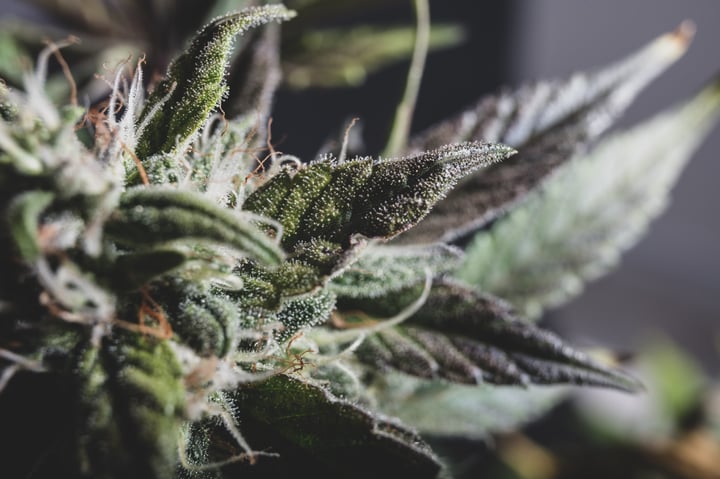
In a world obsessed with strain names and flower drops, Ryan Cook is looking deeper—into the genetics themselves. As the co-founder of The Bank, one of Colorado’s most respected flower brands, and a longtime leader in cultivation strategy, Cook believes the next major evolution in cannabis isn’t about hype. It’s about F1 hybrid genetics.
“To me, it's the evolution of our industry. It is where we're headed.”
On the High Touch podcast, Cook broke down why stabilized genetics matter, how they mirror innovations in traditional agriculture, and why F1 hybrids could be the key to consistency, scalability, and real consumer trust.
What Are F1 Hybrids—and Why Should You Care?
F1 hybrids are first-generation crosses of two genetically stable parent lines. In cannabis (as in corn, wheat, and other crops), this leads to consistent, predictable performance in traits like yield, potency, and resistance.
This isn’t new science—it’s what transformed American agriculture in the 20th century.
“From 1830 to 1930… we harvested [corn] at 20 bushels per acre. From the 1930s on, we saw an 800 to 1000 percent increase in yield—and it’s because of F1 hybrid genetics.”
Cannabis has lagged behind. For decades, most breeders were essentially “pollen chucking,” followed by a few rounds of pheno hunting. While this created beloved strains and lots of diversity, it didn’t build stability. Especially in commercial-scale production, that creates risk.
“If I modify [a production room] in an R&D program… and I end up with 50 grams [per square foot], that hurts our bottom line and it hurts our shareholders.”
Why This Matters for the Whole Supply Chain
Unstable genetics don’t just make life hard for cultivators—they ripple across the entire industry:
- Retailers deal with inconsistency
- Brands can’t scale confidently
- Customers can’t rely on product effects
Cook believes F1 hybrids can change that. With stabilized genetics, producers can meet key performance indicators (KPIs) consistently. And more importantly, customers get a more predictable experience.
“We’ve genetically understood what these plants are… and it teaches you how to actually operate a business well.”
The Role of Phylos and the Race for Cannabis IP
One company Cook singled out on the podcast is Phylos, a genetics innovator that has been working on cannabis IP since 2014. They're now releasing 4–6 new stabilized F1 genetics every quarter, with a focus on yield, chemical profiles, and plant performance.
What makes this different from your average strain drop?
- Backed by genomic data
- Repeatable outcomes across facilities
- Designed with commercial cultivators in mind
This level of agricultural discipline is new to cannabis—and long overdue. And it signals the rise of cannabis IP as a serious business lever.
A Shift from Art to Science (But Not at the Expense of Quality)
Cook doesn’t discount the value of pheno hunting or small-batch cultivation. But he sees F1s as an essential evolution for the parts of the industry that need predictability—especially at scale.
“We're always looking for innovative ideas… and this is one of the most exciting.”
As cannabis matures into a regulated, competitive, and investor-driven space, genetic consistency becomes more than a luxury—it’s a requirement.
And with F1 hybrids, Cook sees a future where the best parts of cannabis culture—quality, variety, ritual—don’t disappear. They just get better tools to grow with.
🎧 Curious to hear more? Listen to the full episode of High Touch featuring Ryan Cook